
Development of fast, SEO-optimised websites
I build websites with modern architectures focused on maximum speed, security and scalability.
Is your website slow or struggling to scale?
A slow website loses visitors, hurts SEO and reflects poorly on your business. Many projects face issues like:
- High load times that lose users
- Poor Core Web Vitals that hurt rankings
- Architectures that don't scale with traffic
- Websites that are hard to maintain or update
A performance-first approach from the start avoids these problems and guarantees a solid foundation for growth.
Get a quote
What's included
Everything you need to grow online
Maximum loading speed
Architectures designed for minimal response times and a smooth user experience.
Perfect Core Web Vitals
Optimisation focused on the metrics Google uses to evaluate user experience.
Advanced technical SEO
Structure and performance optimised to maximise search engine visibility.
Scalable architecture
Solutions ready to grow with traffic and project requirements.
Fast user experience
Pages load almost instantly, improving navigation and reducing bounce rate.
Security and availability
Secure infrastructure with high availability and protection against threats.
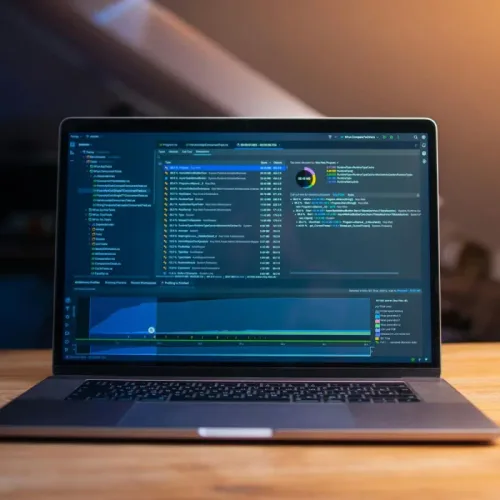
Modern architectures for demanding projects
When performance is critical, I use technologies and architectures designed specifically to achieve:
- Perfect Core Web Vitals scores
- Minimal response times
- Maximum security and availability
These solutions are especially suited to projects with high traffic volumes, advanced security needs or high scalability requirements.
Get a quoteHow I work
Clear process, predictable results
01
Requirements analysis
We analyse the project needs: expected traffic, technical requirements and performance goals.
02
Architecture definition
We design the most suitable architecture based on the project requirements.
03
Development and integration
I implement the solution with the selected technologies and necessary integrations.
04
Optimisation and testing
We measure and optimise performance until the defined goals are met.
05
Deployment and support
We deploy the project on the appropriate infrastructure and provide post-launch support.
Portfolio
High-performance projects
I have developed projects with modern architectures focused on maximum speed, security and scalability.
FAQ
Frequently asked questions
Why does website speed matter?
Website loading speed is one of the most important factors for the online success of any business. A slow website negatively affects user experience: Google studies show that when load time exceeds three seconds, more than 50% of users leave the page before it finishes loading. This translates directly into lost potential visitors and, as a result, lower conversion and sales. Speed is also one of the ranking factors Google considers in its algorithm, especially through Core Web Vitals. A fast website not only retains users more effectively but also tends to rank higher in search results. For all these reasons, performance optimisation is not a luxury but an investment with a measurable and direct return on business results. Every second saved in load time has a real impact on the number of visitors who stay and ultimately convert.
What are Core Web Vitals?
Core Web Vitals are a set of metrics defined by Google to measure the quality of the user experience on a web page. Since 2021 they have been an official part of Google's ranking algorithm, which means they directly affect SEO. They currently include three main metrics: LCP (Largest Contentful Paint), which measures the time it takes for the largest visual element on the page to load and should be below 2.5 seconds; INP (Interaction to Next Paint), which evaluates the browser's responsiveness to user interactions; and CLS (Cumulative Layout Shift), which measures the visual stability of the page, meaning how much elements move while it loads. Achieving optimal scores on these metrics requires optimising images, reducing blocking JavaScript, improving server response time and eliminating unnecessary resources that delay loading.
How is it different from standard WordPress development?
Standard WordPress development covers the needs of most projects perfectly: corporate websites, blogs, portfolios and small ecommerce stores. However, when a project has more demanding requirements in terms of speed, traffic or security, high-performance architectures offer significant advantages. The main difference lies in the technology used: instead of generating pages dynamically on each request (as WordPress does by default), static or headless architectures generate the HTML in advance, allowing near-instant response times and virtually unlimited scalability. This translates into Lighthouse scores above 95, less dependence on the server and greater resilience during traffic spikes. The trade-off is greater technical complexity and a higher development cost, which is why this type of architecture is best suited to projects where performance has a direct impact on the business.
Does a high-performance project cost more?
A high-performance project typically has a higher development cost than an equivalent standard WordPress project. This is mainly due to the additional technical complexity: the architecture requires more configuration work, more performance testing and, in some cases, a more sophisticated deployment infrastructure. However, this additional cost must be evaluated in relation to the return it generates. In projects where speed directly impacts conversion — such as online stores, lead generation landing pages or sites with high traffic volumes — the improvement in performance can translate into a significant increase in sales and leads. In the long run, savings on infrastructure (many static architectures have very low hosting costs) and the reduced need for technical maintenance also help to balance the initial investment. Every case is different, so it is important to assess the expected return before deciding.
Can I migrate my current website to a high-performance architecture?
Yes, it is possible to migrate an existing website to a higher-performance architecture, although the process requires careful planning. Before proposing any migration I carry out a detailed analysis of the current website: the technology used, content volume, existing integrations and performance goals. Based on that analysis, I propose the most suitable migration strategy, which could be a full migration or a progressive approach where the architecture is modernised in phases. In both cases I make sure to preserve existing SEO: 301 redirects, URL structure, hreflang tags where applicable, and all the elements that affect current search rankings. A well-executed migration not only improves performance but can also lead to an improvement in Google rankings over the medium term, as the site becomes faster and more technically sound.
What Lighthouse score can be achieved?
With the right architectures it is possible to achieve scores of 95 to 100 in the Performance, Accessibility and SEO categories in Google Lighthouse consistently. These results are achievable because static and headless architectures eliminate many of the factors that drag down performance in traditional WordPress: blocking JavaScript, real-time database queries, server-side rendering with high latency, and so on. In projects built with Astro, for example, minimal JavaScript is achieved thanks to the islands architecture concept, allowing very low load times even on mobile devices with slow connections. It is important to understand that Lighthouse measures under laboratory conditions and that real production results also depend on the hosting infrastructure chosen. The goal is always to achieve the highest possible scores and excellent real-world performance, not just in synthetic metrics.
Can it be integrated with a content management system like WordPress?
Yes, this type of architecture can be perfectly combined with WordPress as a content management system, in what is known as a headless or decoupled architecture. In this approach, WordPress remains the tool that editors use to create and manage content through its administration panel, but the frontend (what the user sees) is built with more modern technologies such as Astro or Next.js, which consume the content through the WordPress REST API or GraphQL. The result is the best of both worlds: the familiarity and flexibility of the WordPress panel for content management, combined with the performance and scalability of a modern frontend. It is especially suitable for projects with an editorial team that already knows WordPress and does not want to change their workflow, but needs higher technical performance on the frontend side.
Do you need a faster, more scalable website?
If your project needs maximum performance, I'd be happy to help you find the most suitable technical solution.
Get a quote